
Introduction:
Modern day farmers must utilize IoT as it enables them to collect real-time data from their fields, machinery, environment, and crops to make informed, timely decisions. But the question is what exactly is precision agriculture and what role does IOT play in it? Continue reading this blog article as it will help you gain a deeper understanding of IOT in precision agriculture.
Farming practices should change with time to meet the demand of the time. That’s why, efficient, sustainable, and high-yield farming practices have become more urgent. This is where Precision Agriculture (PA) steps in. Most importantly, at the heart of this smart revolution lies the Internet of Things (IoT).
What is Precision Agriculture?
Precision Agriculture refers to data-driven farming methods. This particular technique requires digital technologies to observe, measure, and respond to variability in crops and soil. The goal is to optimize inputs like water, fertilizer, and pesticides to improve yield, minimize waste, and increase sustainability
What is the Role of IoT in Precision Agriculture?
IoT (Internet of Things) in precision agriculture refers to the network of interconnected devices such as sensors, drones, GPS trackers, and smart machinery. These devices help collect and transmit data from the field to cloud-based platforms where it is processed and analyzed.
This interconnected system allows farmers to:
- Monitor soil and crop health remotely
- Track weather and environmental conditions in real-time
- Automate irrigation and fertilization systems
- Make data-backed decisions on seeding, harvesting, and spraying
IoT bridges the gap between field conditions and digital insights, turning traditional farms into smart, self-optimizing ecosystems.
How IoT Works in Precision Agriculture (System Architecture)?
A) Sensors
- Soil moisture and temperature sensors
- Nutrient level detectors
- Leaf wetness and chlorophyll sensors
- Livestock health and movement trackers
B) Edge Devices & Gateways
Microcontrollers or embedded devices that collect data from sensors and transmit it via communication protocols like LoRaWAN, Zigbee, or GSM.
C) Cloud & Data Analytics
The collected data is stored and analyzed using AI/ML algorithms to derive actionable insights.
D) User Interface
Farmers access data and control systems via mobile apps, dashboards, or automated alerts (SMS, email, etc.)
Applications of IoT in Precision Agriculture

1. Soil Monitoring
Soil monitoring is necessary for advanced farming. With IoT-enabled soil sensors it’s easy to track parameters like:
- Moisture content
- Temperature
- pH levels
- Salinity
- Nutrient concentrations
Use Case: Apply water only when needed, reducing irrigation cost and preventing overwatering.

2. Weather Forecasting and Microclimate Monitoring
IoT can be applied for on-field IoT weather stations monitoring. It helps predict:
- Rainfall
- Temperature
- Wind speed
- Humidity
- Solar radiation
Use Case: Schedule pesticide spraying when conditions are optimal, reducing chemical waste and crop damage.
3. Smart Irrigation Systems
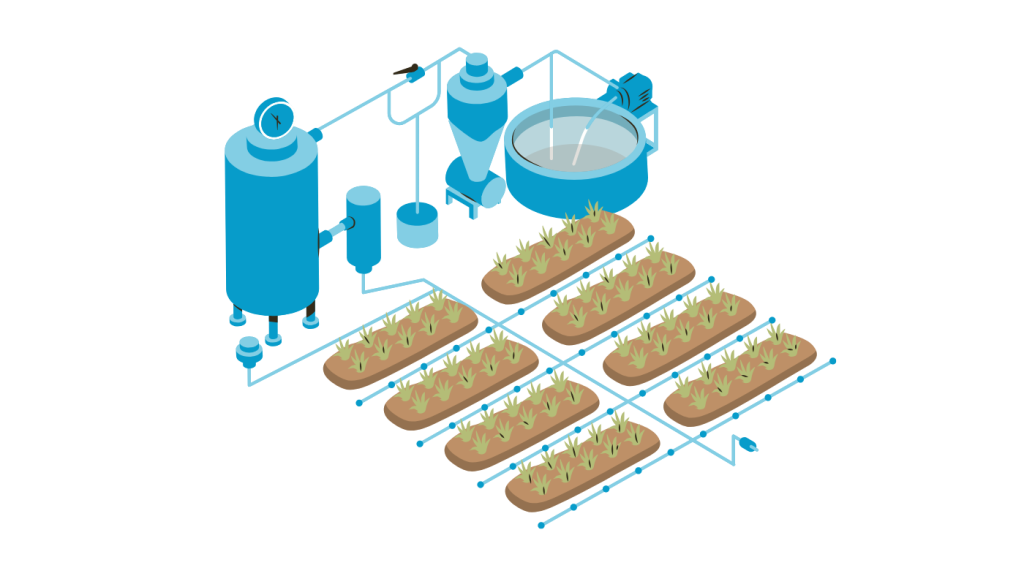
IoT devices are also used for automated irrigation. Farmers can get access to real-time moisture data and weather forecasts for smarter irrigation systems
Use Case: Reduce water usage by 30–50%, prevent water stress in plants, and improve root development.

4. Livestock Monitoring
Some good examples are IoT wearables (e.g., collars) which can help monitor:
- Heart rate
- Body temperature
- Movement/activity
- Feeding and reproduction behavior
Use Case: Detect illness or estrus early, optimize breeding cycles, and prevent livestock theft.
5. Drones and Remote Imaging
For smarter farming practices drones and remote imaging can also be utilized. Drones equipped with infrared cameras can:
- Assess plant health
- Detect pest infestations
- Monitor crop growth stages
- Create topographic maps for planning
Use Case: Precision spraying, yield prediction, and area-specific treatment.
6. Variable Rate Technology (VRT)
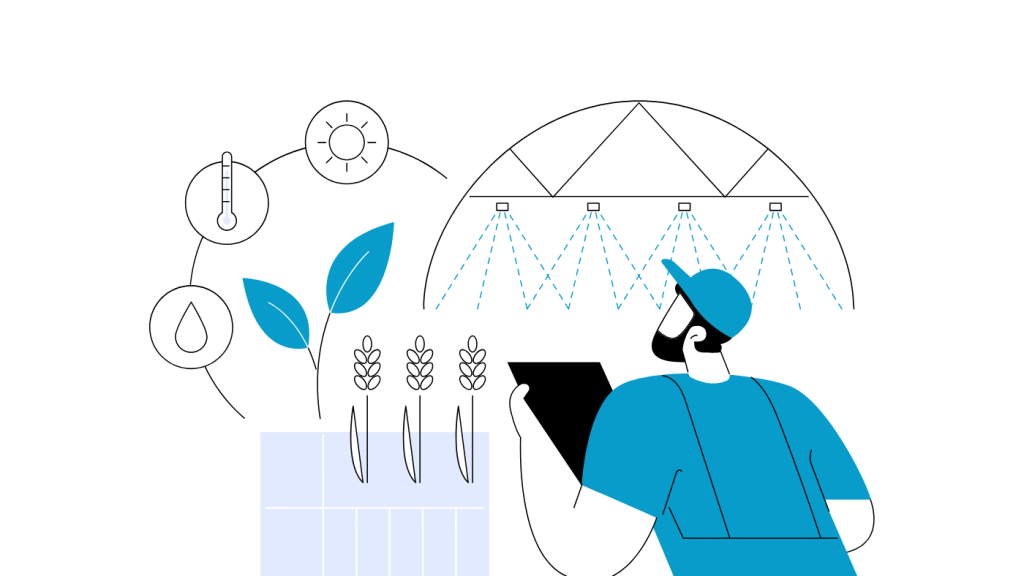
IoT-powered machinery can adjust seed density, fertilizer, and pesticide application in real-time based on field data.
Use Case: Minimize input waste, increase productivity, and reduce environmental damage.
Benefits of IoT in Precision Agriculture:
| Benefit | Impact |
| Increased Crop Yields | Optimized input use and timely interventions enhance productivity. |
| Water Conservation | Data-driven irrigation minimizes wastage and protects water resources. |
| Cost Reduction | Reduces labor, energy, and input costs (fertilizer, pesticides). |
| Early Pest & Disease Detection | Proactive management reduces crop loss and treatment costs. |
| Better Decision Making | Historical and real-time insights enable accurate planning and forecasting. |
| Environmental Sustainability | Reduces runoff, pollution, and carbon footprint. |
A Real-World Example
Case: Smart Farming in Punjab, India
Farmers using IoT-based irrigation systems reported:
- 35% reduction in water usage
- 25% increase in yield
- 40% drop in fertilizer costs
The system used soil sensors, a mobile app, and automated valves controlled via cloud-based dashboards.
Challenges in IoT-Enabled Precision Farming
Yes, there are some challenges and they need to be addressed:
- High Initial Cost: Sensors, connectivity infrastructure, and software licenses can be expensive.
- Connectivity Issues: Many rural areas lack reliable internet or cellular networks.
- Lack of Digital Skills: Farmers may need training to use IoT platforms effectively.
- Data Privacy: Protecting farm-level data from unauthorized access is essential.
- Standardization: Interoperability between devices from different vendors can be complex.
Future of IoT in Precision Agriculture
The evolution of IoT in agriculture is expected to bring:
- Edge AI: Real-time decisions made directly on devices without cloud dependency.
- Blockchain Integration: Secure farm-to-fork traceability of food and inputs.
- 5G Networks: Ultra-low latency enabling faster data transmission and device communication.
- Robotic Automation: Autonomous tractors, weeders, and harvesters powered by IoT.
Integration of IoT with Other Smart Technologies
- AI & Machine Learning: For disease forecasting, yield prediction, and weather modeling
- GIS & Remote Sensing: Location-aware analytics for large-scale farms
- Big Data: Aggregating data across seasons, farms, and regions to build predictive models
- Cloud Computing: Scalable data storage and computational power for analytics
Conclusion
IoT isn’t just enhancing agriculture. Rather it’s transforming it from the ground up. In precision farming, IoT equips farmers with real-time insights and intelligent tools that enable smarter, more sustainable, and more profitable decisions.
By shifting from intuition-driven methods to data-backed, real-time strategies, farmers can respond proactively to changes in the environment, crop health, and resource availability. Thus, it becomes easier to ensure higher yields, reduced waste, and a resilient future for agriculture.